
Building New Business

If you have read my blog ‘ Building New Business
’ you may be familiar with my use of metaphors, golf analogies and ‘word pictures’. If not, get ready.
When Jack Nicklaus was ‘the man’ on the
PGA tour, it has been said each year Phil
Rodgers, Jack’s coach during the late ‘60s/early ‘70s, and helped him refine
his swing and develop a more aggressive style of play, would start off each
season by reviewing how to hold the club.
Yes, arguably the greatest golfer of all
time began each season reviewing how to hold/grip the golf club.
Why is that important in the AEC industry? Allow me a quick explanation of what I do.
Q:
“Bobby,
what exactly is it you do?
A:
“I am a business development, sales and marketing consultant for the
AEC Industry.”
Q:
“Help me
understand that.”
A:
“OK, I am kind of like a golf teacher coming in to help a team. They have been playing golf for years, enjoy
the game…but are looking to improve. I
come in, and instead of looking at their grip, stance, backswing, downswing,
follow through, watch everyone hit a few balls…I review their processes for:
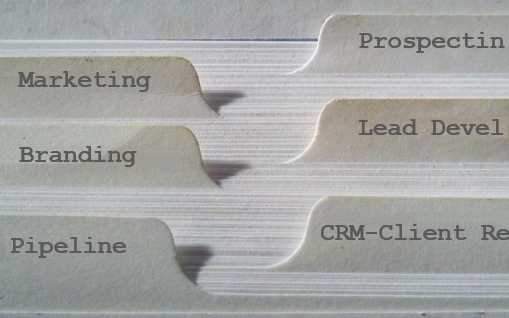
-- Marketing
-- Pipeline
Control
-- Collateral Materials
--Statement
of Qualifications
-- Prospecting
-- AIA-305
-- Account
Management
-- Target Audience Review
-- Presentations
-- Social Media
-- Lead Development
-- CRM & Data Management
-- Branding
-- Networking
-- Automation
…and more
Then, we keep what is working, tweak what
is not…and add what is missing.”
The idea of reviewing the fundamentals
led us to create our ‘AEC Business Development and Marketing Audit’ – which is
simply a self-performing exercise to provide insight on how well you are doing
with specific processes.
The audit is simply about 110 questions challenging what you are doing
regarding prospecting, account management, inbound/outbound marketing, pipeline
management, networking, posturing, market definition and more.
The audit has been 20+ years in the making, born from our experiences working
with over 335 unique AEC companies such as architectural and engineering firms,
general contractors and subcontractors, building product manufacturers and
suppliers. At the very least, you should
be able to find a few areas of opportunity to improve your game.
To kick off our
LinkedIn Newsletter
, I will send a copy of the audit to anyone
requesting it in the next five days. Now,
if your company is within the above-mentioned verticals, I am confident you
will gain some value. Also, I will only
send you two emails
. First, without
the attachment, to let your email servers know I am friendly, then I will send
another email with the audit.
NOTE: You will not hear from me again unless it is at your request
. (You have a question, etc.)
I have signed up for ‘free’ things before and got ‘carpet-bombed’ with follow
up - ‘Do you want fries with that’ upsell attempts. Nothing wrong with trying to close a deal,
but that is not how I work.
Even if you don’t request the audit, I encourage you to go through your
Business Development and Marketing processes internally. Meet with your operations team or another
complimentary business and have a ‘shop talk’ session.
The first step to improvement is a close look at how things are currently with
input from someone other than yourself.
Be challenged!
“I appreciate correction, for I replace
ignorance with knowledge.” - Socrates
The reason Jack Nicklaus had golf teachers at the height of his career is
because they could see something he couldn’t.
That is part of why he was who he was.
He did not sit on ‘auto-pilot’ without challenging himself to be better.
When it comes to Building New Business, I encourage everyone to do the same.
Thanks for reading!
------------------
An old joke came to mind recently as I prepared
for the start of a new client engagement. It is
one of those ‘fill in the blank’ jokes where you pick on your rival school and
it goes like this:
Q:
Do you know why you can’t find
ice anymore at the ( Rival School
) campus?
A:
The
person who had the recipe died!
Hilarious, right?
The reason this joke came to mind is that as I
think about maybe slowing down one day, I realize I have been fortunate with a career
that has allowed me to gather a lot of ‘recipes’. Since 2001, we have worked with close to 350
different companies in the AEC marketplace on helping them Build New Business
in one form or another.
This has allowed us to see ‘behind the curtain’ from Fortune
500 companies down to the ‘solopreneur’ who left the large design firm, with their
last name on the building, and starting over in their garage.
So many of those experiences, lessons, pearls
of wisdom collected through the years all gets folded into the next engagement. I tell each client: What we will work on is
not just how I did things ‘back in the day’ but is the result of an ongoing,
refining, evolution of each process.
That said, I am taking this opportunity to
share two new offerings:
(1) Building New Business – The LinkedIn Newsletter
and
(2) Building New Business – Not A Newsletter
The first will be exactly what is suggests, sharing thoughts, ideas and techniques
at a level that most readers should be able to pull something useful into their
business development and marketing processes.
The second will be a more concise tip…something
we find is often overlooked but can make a meaningful difference.
If you have seen me do our ‘Building New
Business 2.0’ program live, you know I always start off with a card trick. The point of the trick is to show how easy change
can be if we just look at a situation differently.
I do the trick, challenge to audience to come up with ways explaining how I did
what seems to be highly improbable. To
date, no one has guessed the solution.
Once I share the solution, the response is always the same. “Wow…that was so easy.”
So, stay tuned if you want to learn more of the recipe of how we help others
Build New Business because if I do slow down, and may be so bold...I am confident we have some worthy content to share.
Ice is a good thing to have.
Engineering Better Business Development
First and foremost, I am not an engineer.
However, I am a process person and a big believer in the wise saying, “ Processes run businesses, people run processes.” Engineers are process people as well, which is part of why I have enjoyed working with them, especially when it comes to building new business.
Having been in the AEC industry my entire career, the process waters in which I swim are all about business development, marketing, data management and working with engineering and architectural firms, general contractors, subcontractors and building product companies. Though all the above have different roles, the process for effective business development is the same.
If one is looking to engineer a better business development
process, I suggest starting with an audit of current practices. When engaging a new client, we start with a
review of over 110 specific items worthy of review and further
consideration. Allow me to share a few items
to consider:
Online Presence
How does your firm’s visibility compare to your competition?
Do you have an active LinkedIn Company Page?
How engaged are you in social media?
Customer Relationship Management (CRM)
This should be your top priority if you are ‘enjoying’ any downtime. Give your CRM a thorough review to make sure
you are leveraging this valuable tool to your benefit.
Review your report menu, ask your project managers, marketing team, operations, etc. if there is a report or list they need but are not currently receiving. Make sure your system delivers the report automatically at the appropriate time/interval.
Can you effectively tell where you stand with each prospect as far as being able to submit a proposal?
Can you see, on one screen, a quantifiable result of the past 30-day efforts of your proactive approach to marketing your business? Emails, calls, appointments, marketing packages and qualification statements sent, etc.
What is your rate of improvement on the closing a deal timeline for the past three years?
Side Note : For those who may be saying, ‘But Bobby, we’ve been in business for XX years without a CRM.” I don’t doubt that. But are you still using a slide-rule for calculations? Still drawing on paper?
(
Hint:
Excel/Outlook is not a CRM.)
Networking
What percentage of new business comes from your formal networking group?
Can you easily identify your top three networking categories for leads?
Do you have a formal finder’s fee program?
Qualifications
When was the last external review of your current company
presentation?
When was the last external review of your current statement of qualifications?
Somewhere on the timeline between entering a new contact’s information to signing a contract is often doing the proverbial ‘dog and pony show’. (Sales or qualification presentation.) I suggest you present yours live, with a trusted ally, share your ‘presentation deck’ and ask for their feedback. The same can be done with your collateral material, elevator pitch, tagline, etc.
Go through your client list and if you haven’t already, determine what makes a company an active or inactive client. Once you have set that benchmark, create a brief template to touch base and reintroduce yourself.
Think about the
following, from a non-engineer. I
believe few things rival a set of plans and specs for providing very specific
information and defining processes to reach a desired goal. In construction, plans
and specifications tell how steel will be erected, how many windows, doors and
ceiling tiles will be installed and which manufacturers can provide those
components.
The same data set will indicate how much concrete will be needed, the type of
roof system all the way down to something as specific as the direction air will
flow from a diffuser. Now, apply this way
of thinking to the desired goal of a new, targeted client.
There are so many items to unpack from a thorough business development and
marketing audit. Each result should be
viewed as an opportunity to design a better process.
In closing it is important to understand:
Marketing is a process.
Networking is a process.
Prospecting is a process.
Lead Generation is a process.
Lead Management is a process.
Building New Business is a process.
Business Development is a process.
Customer/Account and Prospect Management is a process.
W. Edwards Deming, who was an engineer, once said, "If
you can't describe what you are doing as a process, you don't know what you're
doing."
I have to believe he may
have been talking about business development in the AEC world.
-------------------
Bobby Darnell is the founder and Managing Principal of Construction Market Consultants, Inc. An Atlanta based consulting group specializing in business development, sales, marketing, CRM as well as executive placement for the AEC (Architectural, Engineering and Construction) industry.

Since I took my first philosophy course as a freshman in college, I have been a fan. In the many years since, I still enjoy studying philosophy and can say that doing so has done much more for me than being able to answer a few more questions on Jeopardy than I would have otherwise.
Bear with me here as I promise to quickly get beyond the ‘school lesson’. If you read my post on ‘Magic and Sushi’ then you may remember that my passion for magic (Illusions) has helped me in business as it taught me to look at situations differently as far as coming up with solutions that may not be so obvious at first; the same is true with philosophy.
That said, let me take you to what I have learned watching some of the home repair/fix-it shows on cable. I am not a handyman, but I do enjoy watching the work of those who are. In watching these shows, and I admit I speak from an understanding that I know little about interior design, I could not help but notice how much of what is suggested as a solution seems to be quite subjective.
A few examples:
1. We want to
add this color to the baseboards because it will anchor the theme throughout.
2. If we place this bowl on the table, it will serve as a focal point helping
to distract the buyer from the fact that the ceiling is not that high
3. If you are going for Zen, then nothing says Zen like river rock and
textures.
Now, these claims may in fact be absolutes. I could query 1,000 designers and they may all be in total agreement and if so, fine. The point I am making is that as you are trying to grow your business, be careful of what may be subjective advice passing for an absolute.
A few examples:
1. Cold
calling is for the stone age, no one cold calls any more
2. If your business card does not make someone do a back flip, get rid of it
and get one that does.
3. If you are not subscribing to a lead service, you are dead in the water.
In my, admittedly, subjective opinion, there are elements of truth in each, but one should not accept or discard each as an ‘either/or’ (Either true or false). I would ‘translate’ each as follows:
1. There may
be better options for you than cold calling.
2. A great looking business card is better than a dull or amateurish looking
one.
3. Subscribing to a lead service could give you an advantage.
If you are still reading, allow me to jump back to the ‘classroom’ briefly and what is known as the ‘fallacy of appeal’. This is common form of fallacy in that, rather than present an objective argument that stands on its own merit, presents some form of appeal, prompting the listener to accept a point without further questioning.
As you build
new business remember there are lots of free advice out there, mine included. I
encourage you not to fully discount or embrace what you read but rather see how
it can apply to your business and take what truth from each that will help.
Sometimes, the value may be nothing more than hearing or reading something that
almost immediately you reject as ‘crazy’ but, after some thought, may prompt
you to, as Apple says, ‘think different’.
In answering emails and my involvement in discussions in industry related forums; it is easy to see/read so much advice that is pure opinion. In tough economic times, are there any absolutes that deserves a company’s focus? I believe there are, the good ole P&L Statement comes to mind.
However, the path one takes to go about making productive changes will be paved with subjectivity which is why I am such a big proponent of doing all you can to not just ‘shoot from the hip’ but document your changes, tweaks, adjustments. (See: ‘Practice Does Not Make Perfect, Perfect Practice Makes Perfect’ - Bumper Sticker (Business) Theology –Thursday, November 6, 2008)
Bottom line, keep what works, toss what does not but make sure you understand the difference on absolutes as opposed to whether you find it personally appealing.
As always, if you have any questions, please feel free to drop me a line via email…I love talking shop.

Recently, I had to pleasure of being a featured guest on PSMJ
’s - ‘A/E/C Senior Executive Briefings’. My contribution was speaking on Business
Development and CRM. One of the points
raised was how to highlight CRM as a positive tool versus a negative one. Allow me a brief anecdote.
Way back when, I was working with a national contractor that specializes in retail
renovations across the United States. We
sold a rather substantial contract that involved hundreds of locations with
part of the scope requiring them to move entire aisles of shelving/merchandise
inside each store.
There are two basic ways to move an entire aisle of product. (1) The hard way. Remove all merchandise, disassemble and move the
shelving or (2) Roll the entire aisle, ‘as is’, leaving the merchandise in
place.
Several crew members from the retailer, at first, were struggling
a bit with the equipment and eventually the team leader told me, “This thing
doesn’t work.” Now, I had witnessed it
working, in several similar situations, many, many times…and, not only working,
but working very, very well. It is truly
an amazing, well designed, solid piece of equipment. It was time to remind my contact there is,
like most things, a slight learning curve.
We had developed a pretty good relationship getting to this point so I felt
comfortable saying what I was about to say.
I simply asked if he played guitar.
After a slight pause, he said he did not. (I went out on a limb by asking because if he
did…it would have ruined my ‘parable’.)
I then asked him, “So, if I handed you Vince Gill’s guitar and asked you
to play a song and you couldn’t, would it because you don’t yet know how or
would it be because Vince Gill’s guitar does not work?”
My gamble paid off as he laughed, nodded and said, “I see your point. Yes, we should get a little more training.” After a bit of receptive training, the crew
began to marvel at how much faster, easier, better the project moved forward.
This is the same with CRM. Without a
structured plan in place and a little training, it will be just one more tool
no one knows how to use or wants to use.
- Marketing is a skill
- Networking is a skill
- Prospecting is a skill
- Lead generation is a skill
- Building New Business is a skill
- Business Development is a skill
Remember, implementing CRM does
absolutely nothing for your business
.
However, the continued and effective use of it will.
One of my favorite moments in the wonderful movie Forrest Gump is when, after running back and forth across the country for three years, Forrest decides…out of the blue…to just stop running.
During his journey, Forrest gained a fairly large following of other runners who, for whatever reason, ran behind him. Suddenly, out in the middle of nowhere, Forrest stops, takes a breath and declares that he is tired and is going to go home. The crowd is silent until someone in the group asks, “Now what are we supposed to do?”
Does our present situation feel like this in the ‘new normal’? Forrest’s run could represent the economy, chugging along and everyone else running in stride, doing what they did in the previous ‘normal’. Now, the economy is no longer running ahead of us and many are asking, “Now what are we supposed to do?”
Here are seven things you can do, starting now. (Translation: Today!)
Business Development And Marketing Audit – I begin with this one because I have a freebie for you. Reach out to me and I will send you a copy of our DIY Business Development And Marketing Audit, a document listing 76 items to measure your company’s proactive approach to building new business.
You don’t have to register, there is nothing to subscribe/unsubscribe later, and there won’t be any ‘would you like fries with that’ emails to follow. Simply go to our website and request a copy. (See the link below)
The audit is the product of working with nearly 300 companies, since 2001, in some form of business development, CRM, marketing, sales, prospecting, branding, social media and beyond. After you grade yourself, you can see how well, or poorly, you score and hopefully find a few ways to make some positive changes.
Remote Networking – The current situation is a great time to continue meeting with your private networking group or start one. Being quarantined does not mean we have to stop meeting. Zoom, Zoho, Skype, Slack, etc. make it easy to have ‘face to face’ meetings from afar. Warning, if you don’t have a webcam, expect to pay a premium!
Write An Article – The fact that you are reading this should tell you, articles, blog posts, newsletters, etc. can prove to be an effective way to make a point and/or share a message to a wide variety of inquiring minds. I am proof you don’t need to be Pat Conroy to write an article.
Challenge Your Dog And Pony – Somewhere on the timeline between entering a contact’s information to signing a contract is often doing the proverbial ‘dog and pony show’. (Sales or qualification presentation.) Until you can actually present yours live with a trusted ally, share your ‘presentation deck’ and ask for their feedback. The same can be done with your collateral material, elevator pitch, tagline, etc.
Revisit Inactive Clients – Go through your client list and if you haven’t already, determine what makes a company an ‘active’ or ‘inactive’ client. Once you have set that benchmark, create a brief template and circle back with those you may not have contacted lately. Share a recent success story, ask if there is anything you can do, and if nothing else, forward this article. Bottom line, you could be a valuable resource by letting them know you are happy to help.
Pump Up Your Social Media – The audit lists several ways to do this but the main purpose is it challenges you to check your efforts against your competition. Are you a trend-setter, hanging somewhere in the middle or far, far behind? If you have been ignoring social media, get busy!
CRM Tune Up – This should be your top priority if you are ‘enjoying’ any downtime. Give your CRM a thorough review to make sure you are leveraging this valuable tool to your benefit.
Review your report menu, ask your project managers, marketers, operations, etc. if there is a report or list they need but are not currently receiving.
Can you effectively tell where you stand with each prospect as far as being able to submit a proposal?
Can you see on one screen a quantifiable result of the past 30-day efforts of your proactive approach to marketing your business? Emails, calls, appointments, marketing packages sent, etc.
Is your CRM more stick than carrot when it should be more carrot than stick?
There are so many opportunities here that can come from a little fine-tuning and they are listed in the audit.
Hint: Excel and Outlook is not a CRM.
In closing, I do believe we will get back to the ‘old normal’ soon. I also believe now is the best time to review what you have been doing, keep what is working and correct what is not. Remember, I budget four hours per week to talk shop and bounce around ideas with those sincerely wanting to shave a few strokes off their game.
Audit Link: Click Her e
I am constantly looking for pearls of wisdom that I can learn from, both personally and professionally, as well as share with clients to help them build new business. Most recently, I found one in what may seem an unlikely place…the movie ‘ Bohemian Rhapsody ’.
*Spoiler Alert* – If you have not seen the movie, I am about to offer a quote so consider yourself warned.
The line comes from the scene where the band finds themselves back together in a room, discussing their potential appearance at the US Festival, after Freddie had taken a bit of a detour with an attempt at a solo career. There is a bit of tension and apprehension amongst the group as Freddie explains what he did (solo effort) and why it did not work:
“I went to Munich. I hired a bunch of guys. I told them exactly what I wanted them to do…and the problem was…they did it.” ~ Freddie Mercury
The point he was making is that no one challenged his decisions; no one offered a ‘second opinion’ and the reason Queen was so successful, compared to his solo venture, was collaboration.
The past four or five years, I have been mostly engaged in CRM implementation as the foundation of our ‘ Building New Business 1.0 ’ program. Working with AEC companies on developing a more pro-active approach in their business development and marketing. One of the things I share with each new client is that part of my job will be to tell them when they have an ‘ugly baby’. (Pointing out processes that need adjusting.)
“But Bobby…
…we have been in business for XX years without CRM!”
…we have CRM, we use Excel and Outlook!”
…I don’t see our people embracing CRM.”
In other words, part of my job is to say, “Freddie, you may want to reconsider the tempo of this song, rewrite the bridge and lower the background vocals on the chorus.”
It is always a good idea to challenge the status quo, just to make sure your business development efforts are as efficient and effective as possible. Is your CRM set up so that you can pull the necessary information that helps make this quarter better than last quarter? How fresh is your Statement of Qualifications? Are you as current with your social media outlets as your competitors?
Challenge those around you to challenge current processes because building new business should be more of a group effort as opposed to a solo gig.
#Construction #Marketing #BusinessDevelopment #CRM
————-
Bobby Darnell is the founder and Principal of Construction Market Consultants, Inc. An Atlanta based consulting group specializing in CRM implementation and development, business development, sales, marketing as well as executive placement for the AEC (Architectural, Engineering and Construction) industry.
Bobby can be reached at bobbydarnell [at] cmconl.com

To get to Jacksonville, FL from my hometown one simply gets on GA 400 South, to I-85 South, to I-75 South then, once in Florida, take I-10 East to Jacksonville. Easy peasy.
Now, to get from my house to my favorite Jacksonville, FL restaurant requires much more specific information.
In your company, to grow your business you simply need to successfully price and close more jobs. Easy peasy.
How you successfully price and close more jobs requires much more specific information.
The point here is not about getting from Atlanta to Jacksonville…the point is there are many ways to figure out how to get from A to B.
- Christopher Columbus used a sextant and the stars
- Growing up, we used a folded map and stopped at convenience stores to ask for directions
- Today, we have satellites helping us navigate with near pinpoint accuracy via a GPS app on our smartphone
So, think of CRM as your GPS for getting from: Point A - a new prospect - to - Point B – a paying client.
Just as my favorite GPS app tells me when and where I need to turn, it also can tell me to change my route due to heavy traffic or an accident. It gives me an estimated time of arrival, an indication of the local lawful speed and even how far to the nearest coffee, etc.
One of the biggest hurdles I have found when engaging a prospect interested in CRM is helping them overcome the ‘fear’ of the unknown. To many, CRM is like Social Media…a word/term they hear all the time but do not fully understand.
CRM implementation is definitely a crawl --> walk --> run initiative but the benefits are similar to putting your folded map in the glove box and following your GPS.
I remain convinced there is nothing more powerful to help a company build new business than a CRM used properly. Once one begins to understand the functions and features of this amazing ‘app’…it will serve as a reminder that the shortest distance between two points is still a straight line.
Building New Business 2.0
Building New Business 2.0 is our flagship offering and is an interactive Business Development resource for Commercial Design Firms, General Contractors and Specialty Contractors who do not have full-time Business Development staff.
To Learn more -
click here
Other Blogs
Commercial Construction & Renovation Magazine
Construction Law Musings
www.constructionlawva.com
Copyright © 2023 by Construction Market Consultants, Inc. All Rights Reserved.